Word count: 757. Estimated reading time: 4 minutes.
- Summary:
- An annual comparison of storage pricing has been presented. It is observed that both SSD and HDD costs have dramatically increased, reaching levels seen in previous years. This unprecedented price surge is attributed to the massive spending on AI infrastructure. The current high costs are believed to be unsustainable, though they may continue for another year.
Monday 1 June 2026: 15:28.
- Summary:
- An annual comparison of storage pricing has been presented. It is observed that both SSD and HDD costs have dramatically increased, reaching levels seen in previous years. This unprecedented price surge is attributed to the massive spending on AI infrastructure. The current high costs are believed to be unsustainable, though they may continue for another year.
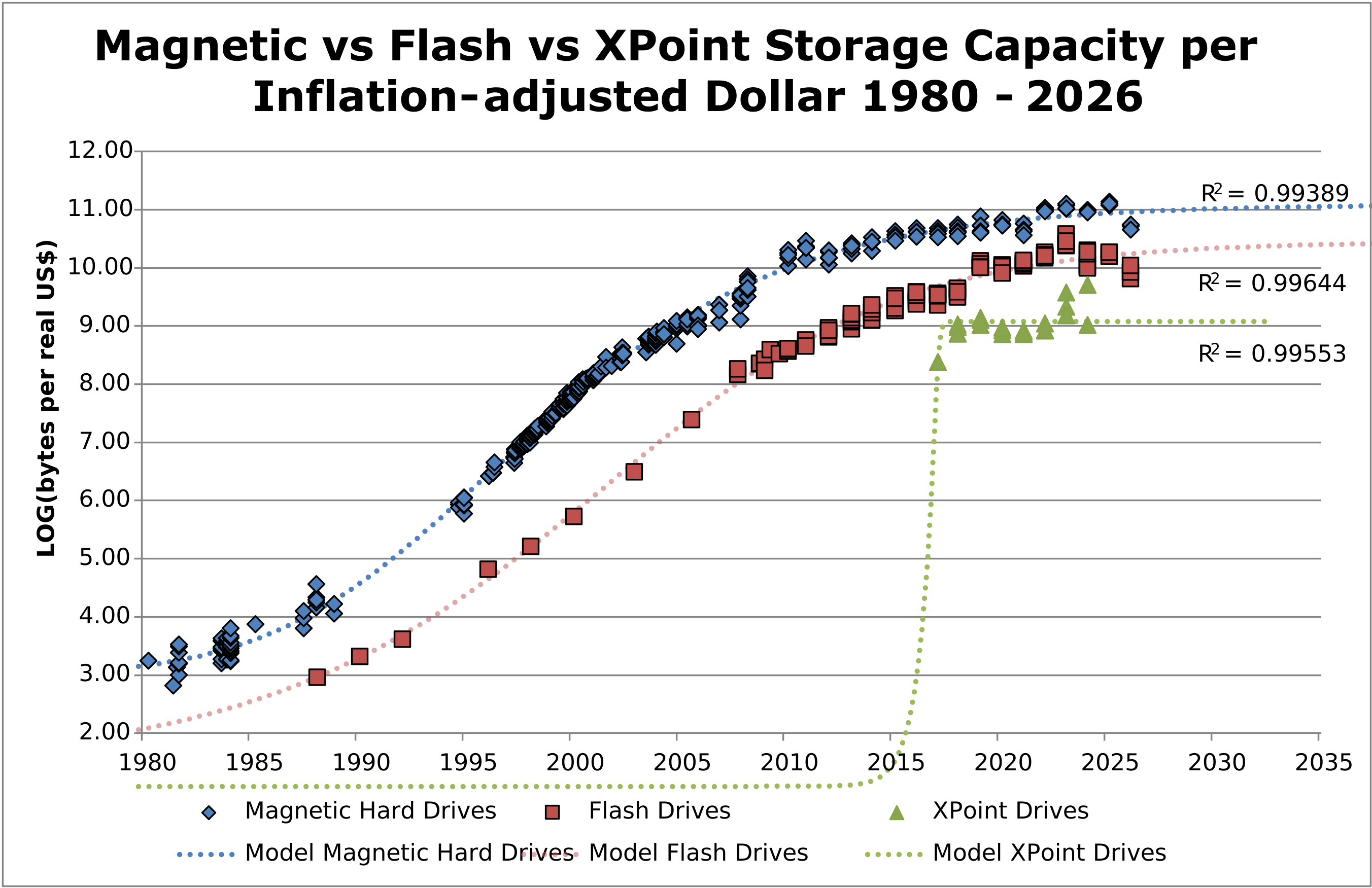
Raw data: http://www.nedprod.com/studystuff/SSDsVsHardDrives.xlsx
What an astonishing year it has been for storage pricing! SSDs are more than double their cost last year – as if we had returned to 2019! Hard drives also more than doubled their cost of last year, and we have returned to 2020 pricing in terms of bytes per inflation adjusted dollar. I certainly have never seen such a massive price increase like this before, nor ever in the historical data apart from when those floods in Thailand took out a good portion of hard drive supply, and that affected hard drives only, whereas this dramatic price surge affects everything. It is unprecedented, to my knowledge.
This time last year I said:
This time two years ago I predicted a recession would cause storage prices to tumble. Here looks like that recession, but so far it hasn’t appeared in the wider US economy, though it has in the wider European and Asian economies.
As regular readers here will remember, I recently picked up a factory recertified 28Tb hard drive recently for a dedicated AI inferencing machine for the site’s security cameras. I got that drive delivered for €400. That might seem a lot, but minus sales taxes (23%) and delivery (maybe €30) that 28Tb enterprise hard drive cost about €300. That same drive cost nearer a grand after taxes this time last year. It’s madness just how much hard drive prices have fallen in a single year. I can’t remember anything like it in recent memory.
And one year later, hard price pricing has lurched violently in the opposite direction, despite that outside of AI the general tech industry is definitely in recession along with all of the US, European and Asian economies if you exclude the AI investment boom.
The AI investment boom is of course responsible for the surge in storage pricing, it has also doubled or more the cost of RAM, CPUs, anything computer related really. Right now is a terrible time to buy new computer hardware, though it’s an excellent time to be within the supply chain for manufacturing computer hardware. Such is the level of spending on AI infrastructure that it’s holding up the US economy and stockmarket, and probably also the Asian economies who would otherwise be in deep recession. They think US$400 billion was spent on AI infrastructure last year, and US$725 billion is the current projection for 2026 – and this omits the estimated injection of funding into their AI companies by the Chinese government as direct financial supports. Landing humans on the moon cost about US$250 billion in today’s money; the whole Vietnam war all in cost around US$1,125 billion in today’s money, but they spent that over twenty years and the tech industry is spending that in just two years. The sums involved are breathtaking, and of course, unsustainable.
Based on Q1 2026 reported results, Meta is now in net debt with the balance sheets of Microsoft and Amazon seeing significant deterioration in the past year. While Meta is in trouble, Microsoft and Amazon have enough cash they can probably carry on spending like this for another year, but after that, they’re going to have to decide if they can justify continuing. In contrast, Google and Bytedance look very healthy and could keep spending like this for years to come, and probably therefore will outlast everybody else when the stack of cards falls down (which I currently assume will be either or both of OpenAI and Anthropic collapsing when investors stop lending more money to them, which will set off a chain of capital withdrawal across the industry).
It is entirely feasible therefore that we have a full twelve more months of this sort of spending on AI infrastructure, and therefore this annual update this time next year will also report historically expensive storage. But I would be very surprised if this remains the case in 2028. I also think that the rest of the economy may become a noose around the neck of tech later this year, there is a fair chance of the financial system doing a wobbly again, maybe in private credit markets or even possibly sovereign debt. That might bring the party to an end before the end of 2026.
I guess we should know by this time next year!
| Go to previous entry | Go to next entry | Go back to the archive index | Go back to the latest entries |